
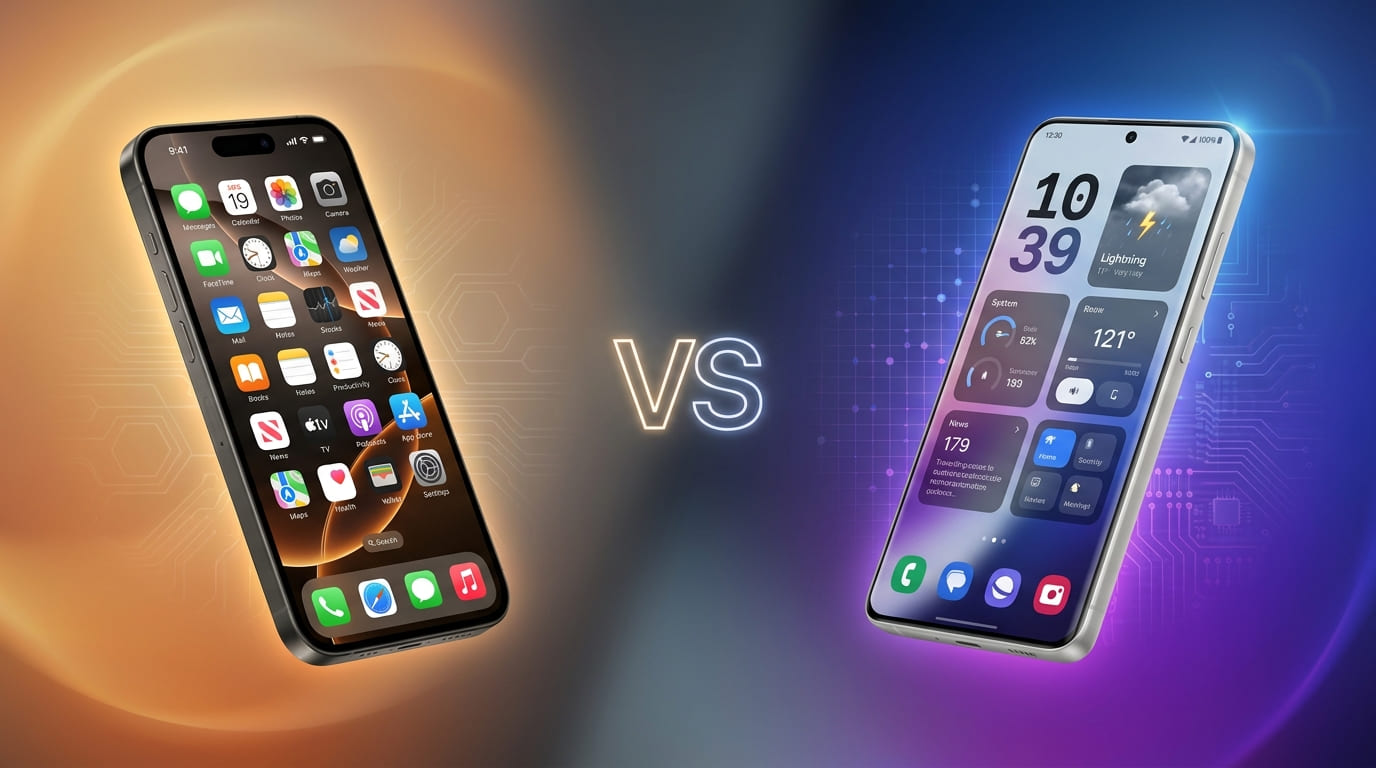
Let’s be honest. You’ve probably had this argument with someone at least once — maybe at work, maybe over dinner, maybe in the comments section of some tech video at 2 AM. iPhone vs Android. It never gets old, and somehow, it never gets fully settled either.
But here’s the thing — 2026 isn’t the same conversation it was five years ago. Both sides have evolved dramatically. The gap that once made the choice obvious for most people? It’s gotten a lot thinner. And in some places, it’s completely disappeared.
So if you’re standing at the crossroads, trying to figure out where your money actually belongs, this is the breakdown you need.
The State of Smartphones in 2026
Smartphones have reached a strange plateau. Not in a bad way — in a “holy cow, how much better can these things actually get?” kind of way.
Apple’s iPhone 17 lineup and Samsung’s Galaxy S26 series are sitting at the top of the market right now, and both are genuinely extraordinary pieces of technology. Google’s Pixel 10 has also carved out a serious reputation. OnePlus, Nothing, and a handful of others are making noise in the mid-range space.
The real question isn’t which phone is technically superior. It’s which one makes sense for you, your lifestyle, your budget, and honestly — your patience level.
Let’s dig in.
Design & Build Quality: Does It Still Matter?
It used to be that iPhones felt premium and most Android phones felt like plastic dreams. That era is long gone.
Samsung’s titanium-framed Galaxy S26 Ultra feels like holding a piece of aerospace engineering. The iPhone 17 Pro is sleek, refined, and incredibly dense in the best way possible. Google’s Pixel 10 has this warm, matte texture that people either love immediately or spend three days warming up to.
Build quality across the flagship tier? Nearly equal. The differences are subtle — weight distribution, button placement, how the screen curves (or doesn’t) at the edges.
Where Android still wins is variety. You want a foldable? Done. A super compact phone that doesn’t compromise on power? Done. A phone with a physical keyboard? Okay, that’s a stretch, but the point stands — Android manufacturers give you options that Apple simply doesn’t.
Apple’s approach is controlled. You get a few models, each well thought out, each with a clear audience in mind. If you like having exactly the right tool chosen for you, that’s actually comforting. If you want to customize everything from form factor to software skin, Android is your playground.
Performance: The Numbers Game Nobody Wins Alone
Apple’s A19 Bionic chip is, on paper and in benchmark tests, still one of the fastest mobile processors ever made. It’s efficient, handles AI tasks at the edge brilliantly, and makes everything feel instant.
Android’s top-tier chips — Qualcomm’s Snapdragon 8 Gen 4 and Samsung’s own Exynos variant — have closed the gap significantly. In real-world usage? You’re not going to feel a difference while scrolling through Instagram or answering emails.
Where the gap shows up is in sustained performance over time. iPhones consistently maintain their speed for 4-5 years without meaningful degradation. Android flagships have gotten much better here, but there are still occasional slowdowns after the 2-3 year mark depending on the manufacturer and how well they handle software updates.
If you’re the type who upgrades every 18 months, this probably doesn’t concern you. If you’re buying a phone and planning to use it until it falls apart — the iPhone has an edge here that’s hard to argue with.
Software Experience: Two Very Different Philosophies
This is where the real divide lives.
iOS in 2026 is polished to a near-obsessive degree. Apple has integrated AI features deeply into the system — predictive text that actually sounds like you, on-device processing for sensitive requests, and a Siri that’s finally — finally — useful in a meaningful way. The interface is consistent. Apps behave the same way across the board. There’s a predictability to it that millions of people find genuinely comforting.
Android 16 is powerful, flexible, and deeply customizable. You can change your default apps for almost everything. You can set up your home screen to look like a productivity dashboard or a minimalist work of art. Widgets are more capable. The notification system remains far superior to iOS. And Google’s AI integration — through Gemini — is woven throughout the system in ways that feel genuinely useful rather than just impressive on a spec sheet.
The honest truth? Android gives you more rope. Whether that’s a good thing depends entirely on what you plan to do with it.
Power users, developers, people who like tweaking — Android is home. People who want a phone that just workswithout a learning curve or ongoing management — iPhone fits that life.
Camera Systems: The War That Won’t End
In 2023, you could make a strong argument that iPhone had the best smartphone camera system, full stop. 2026 is a different story.
The iPhone 17 Pro’s camera system is exceptional. Cinematic video, natural color science, ProRAW support, and computational photography that blends speed with quality. Portrait mode has gotten disturbingly good. Low-light performance is in another league compared to what we had just three years ago.
Samsung’s Galaxy S26 Ultra shoots at 200MP. The zoom capabilities are genuinely wild — you can capture detail at distances that feel almost intrusive. Video quality has improved dramatically.
Google’s Pixel 10, though, might be the sleeper hit. Its AI-enhanced photography — particularly for candid shots, skin tone accuracy across all complexions, and night photography — continues to impress everyone who actually uses it daily, not just reviewers in controlled environments.
The winner? It depends what you shoot.
- Video content creators → iPhone 17 Pro, still the king here
- Detail and zoom photography → Samsung Galaxy S26 Ultra
- Everyday casual photography → Pixel 10, consistently impressive without effort
- Consistency across lighting conditions → iPhone or Pixel, neck and neck
No clear loser. Genuinely.
Ecosystem: The Biggest Factor Nobody Talks About Loudly Enough
Here’s where Apple plays a long game — and plays it brilliantly.
If you own a MacBook, iPad, Apple Watch, and AirPods, switching away from iPhone isn’t just inconvenient. It’s a full lifestyle restructure. AirDrop, Handoff, Universal Clipboard, iMessage — these features work so seamlessly together that the friction of leaving feels enormous.
Google has built a comparable ecosystem, but it’s less tightly controlled. Android phones work with Chromebooks, Google Home devices, and Wear OS watches well. But the experience doesn’t feel as stitched together as Apple’s. It’s capable — just not as cohesive.
If you’re deeply invested in one ecosystem, switching costs are real. This is something marketers don’t shout about, but it genuinely influences satisfaction with your device more than almost any spec.
Price: Let’s Talk About What This Actually Costs
Flagship phones from both sides are expensive. No sugarcoating that.
iPhone 17 starts around $899. The Pro Max? Clear your calendar and your savings account — it’s hovering around $1,299 in most markets.
Samsung’s Galaxy S26 Ultra sits at a similar ceiling. Google’s Pixel 10 Pro is actually slightly more aggressive on pricing, which makes it one of the more interesting value propositions at the top tier.
But Android’s real pricing strength lives in the mid-range. The Pixel 10a, the OnePlus 13, Nothing Phone 3 — these phones deliver 80-90% of flagship performance for 50-60% of the price. That gap simply doesn’t exist on the Apple side. Apple doesn’t really do mid-range. The iPhone SE exists, but it doesn’t compete meaningfully with what Android offers at $400-$600.
If budget is a primary concern, Android wins. Clearly and without argument.
Security & Privacy: A Complicated Conversation
Apple has built its brand heavily around privacy. On-device processing, App Tracking Transparency, and tight control over the App Store have made iPhones the default recommendation for people serious about data privacy.
But Android has closed this gap more than most people realize. Google’s Privacy Sandbox, granular app permissions, and the fact that Pixel phones now receive security updates faster than almost any other Android device — it’s not the wild west it once was.
Samsung Knox adds enterprise-grade security to Galaxy devices. GrapheneOS, for those who go deep into privacy, runs on Android hardware and is arguably the most secure mobile operating system available to consumers right now.
Neither platform is immune to vulnerabilities. But if you want the option for more control over your privacy — and I mean actual control, not just a company’s promise — Android gives you pathways that iOS simply doesn’t allow.
Who Should Actually Buy What
Stop overthinking the specs. Here’s the real decision tree:
Get an iPhone if:
- You’re already in the Apple ecosystem
- You want a phone that works great out of the box, forever
- Video creation is your thing
- Long-term software support matters to you
- You want a predictable, premium experience without configuration
Get an Android if:
- Budget flexibility matters — especially in the mid to upper-mid range
- You like personalizing your experience
- You want hardware variety (foldables, different screen sizes, etc.)
- Google’s AI integration excites you
- You value granular privacy and system-level control
Get a Pixel specifically if:
- Camera quality in everyday life is your top priority
- You want the cleanest Android experience
- Fast security updates and privacy-first design are non-negotiable for you
The Real Answer Nobody Wants to Hear
There is no objectively better option in 2026. The iPhone is not better than Android. Android is not better than iPhone. These are great phones competing at the highest level in history.
What is true is that one of them is better for you — based on your habits, your budget, your other devices, and what genuinely irritates you about technology.
The people who are happiest with their phones aren’t the ones who picked the “best” device according to a spec sheet. They’re the ones who picked the device that fit their life without friction.
So before you drop $1,000+ on a phone because some influencer told you it wins benchmark tests — ask yourself what you actually do with a phone every day. Start there. The right answer usually becomes pretty obvious.
And if you’re still on the fence? Pick the one that feels good in your hand when you hold it in the store.
That matters more than people admit.
