
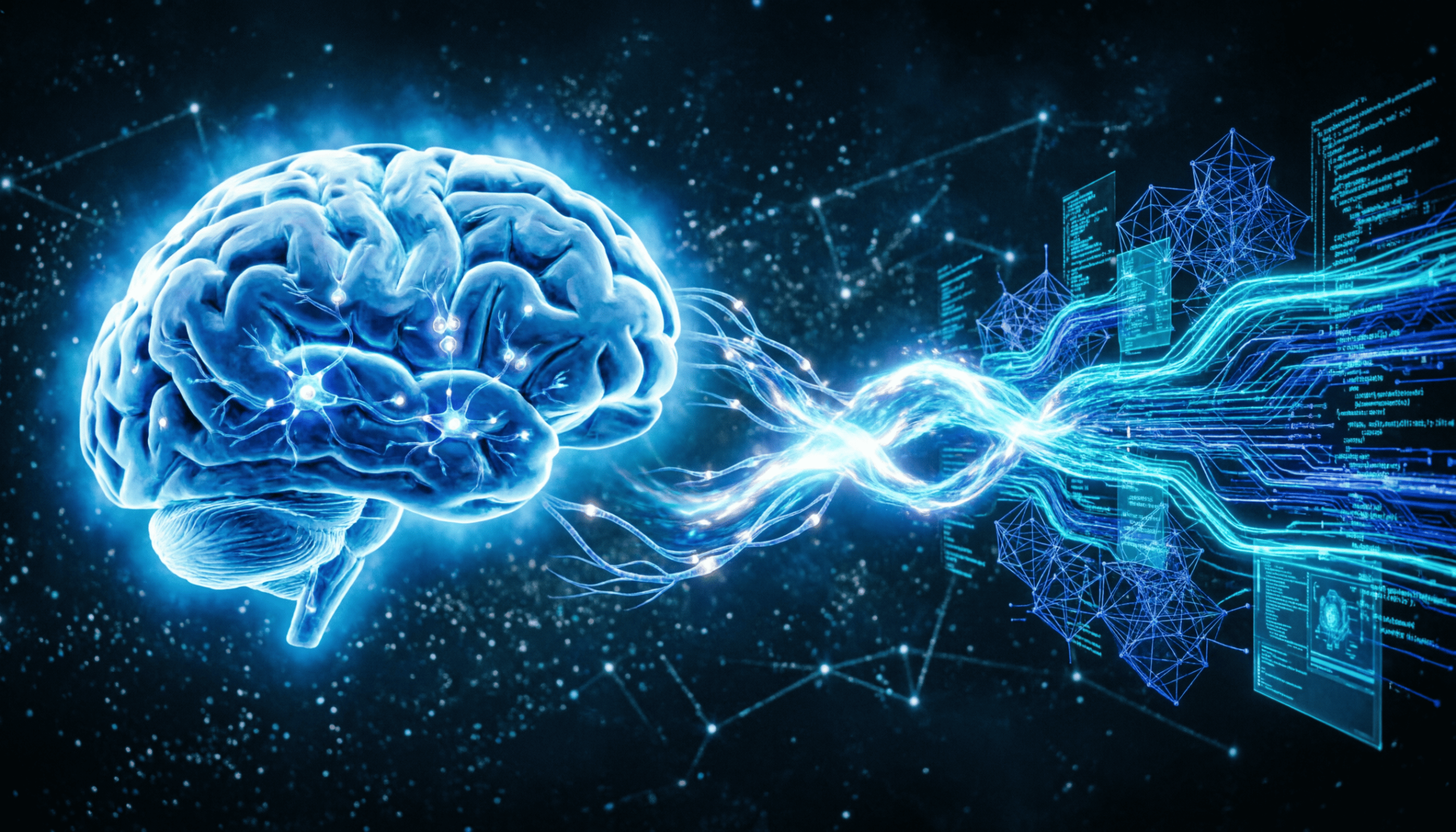
Let’s settle this once and for all.
You’ve probably heard the debates. ChatGPT is taking over jobs. AI is smarter than humans. The robots are coming. But is any of that actually true? Or are we caught up in a narrative that sounds dramatic but doesn’t hold up under real scrutiny?
Here’s what’s actually going on — and the answer is genuinely more interesting than either side wants to admit.
First, Let’s Understand What We’re Actually Comparing
Comparing ChatGPT to the human brain is a little like comparing a calculator to a chef. One is extraordinarily good at a specific set of tasks. The other is… something else entirely.
The human brain contains roughly 86 billion neurons, each forming thousands of connections. It runs on about 20 watts of power — less than a dim light bulb. It learns from a scraped knee, a heartbreak, a smell that takes you back to your grandmother’s kitchen. It doesn’t just process information. It experiences it.
ChatGPT, on the other hand, is a large language model. It was trained on an enormous dataset of text from the internet, books, and other sources. It predicts what words should come next based on patterns it learned during training. It doesn’t know what it said five minutes ago unless it’s in the current conversation window. It has never tasted coffee, felt embarrassed, or wondered what happens after death.
That context matters. A lot.
Where ChatGPT Absolutely Destroys the Human Brain
Let’s be honest. There are things ChatGPT does that no human can match, full stop.
Speed. Ask ChatGPT to summarize a 50-page document. It’ll do it in seconds. A human might take hours, and they’d probably need a coffee break halfway through.
Consistency. ChatGPT doesn’t have bad days. It doesn’t get annoyed at a stupid question. It doesn’t rush through a task because it’s thinking about what to make for dinner. Every response gets the same level of processing — no favoritism, no mood swings, no cognitive fatigue at 4 PM on a Friday.
Knowledge breadth. It can write a sonnet, explain quantum entanglement, generate Python code, and then draft a formal email — all in the same conversation. Most humans specialize. ChatGPT doesn’t have to.
Availability. It’s there at 3 AM when you have an idea and no one to talk to. No complaints. No “can we talk about this tomorrow?”
These aren’t small advantages. For businesses, researchers, and people who need quick, reliable information processing, ChatGPT is genuinely transformative.
But Here’s Where the Human Brain Wins — And It’s Not Even Close
This is where things get interesting.
True understanding. ChatGPT doesn’t understand anything. It’s sophisticated pattern matching. When it writes about grief, it’s drawing on millions of examples of how humans have written about grief. It has never lost anyone. It cannot. That difference — between simulating understanding and actually having it — is enormous, even if the output sometimes looks the same.
Common sense reasoning. Humans are surprisingly good at navigating ambiguous, messy, real-world situations with incomplete information. You walk into a room and immediately read the mood. You know something is off without being able to explain why. ChatGPT struggles badly when situations fall outside its training patterns. It can confidently give you a wrong answer and dress it up so well that you don’t even notice.
Creativity from lived experience. Yes, ChatGPT can write a poem. But the greatest human writing — the kind that makes you put a book down and stare at the ceiling — comes from actual human experience. Pain, joy, confusion, love. ChatGPT is working from secondhand accounts of all of these. It’s reading about fire. Humans have been burned.
Judgment and ethics. Ask ChatGPT a complex ethical dilemma. It’ll give you a balanced, well-structured answer. But balance isn’t always wisdom. Real ethical judgment requires something AI doesn’t have: genuine stakes. When you make a moral decision, you live with the consequences. That weight shapes the quality of human judgment in ways no model can replicate.
Physical reality. The human brain is connected to a body moving through an actual world. It learns by doing — by failing, adjusting, and trying again. ChatGPT has never caught a ball, driven a car, or read a room full of people. Embodied intelligence is something AI is still nowhere near replicating.
The Hallucination Problem — AI’s Dirty Secret
Here’s something the hype doesn’t always mention. ChatGPT makes things up.
Not because it’s lying. It doesn’t have intentions. But because it’s designed to produce fluent, coherent text, it will sometimes generate information that sounds completely authoritative but is flat-out wrong. Fake citations. Incorrect dates. Plausible-sounding medical or legal advice that could genuinely harm someone.
The human brain is not immune to error either — far from it. But humans generally know when they’re uncertain. We say “I think” or “I’m not sure, but…” ChatGPT can deliver misinformation with the same confident tone it uses for verified facts.
That’s a real problem. One that hasn’t been fully solved yet.
So Who Actually Wins?
Neither. And both. Depending on what you need.
If you need to process large amounts of text quickly, brainstorm ideas at scale, write a first draft, or get an answer to a question at midnight — ChatGPT wins, easily. It’s a tool, and for that category of task, it’s an extraordinary one.
If you need genuine understanding, moral judgment, creative insight rooted in real experience, or the ability to navigate a world that doesn’t fit neatly into patterns — the human brain wins. And it’s not particularly close.
The real surprise isn’t that one beats the other. It’s that we’re even framing it as a competition in the first place.
The Smarter Question Nobody’s Asking
We keep asking who wins. We should be asking what happens when they work together.
A doctor using ChatGPT to quickly review research literature, then applying 20 years of clinical experience to make a diagnosis. A novelist using AI to break through writer’s block, then pouring their actual life into the story. A student using ChatGPT to understand a concept faster, then building real knowledge through practice and reflection.
That combination — human judgment layered over AI efficiency — is where the real power sits. Not in choosing one over the other.
The human brain evolved over millions of years to do something remarkable: survive, connect, create meaning. ChatGPT was built in a few years to do something equally remarkable in its own way: process language at a scale no human ever could.
They’re not rivals. They never really were.
Final Thought
The people most afraid of AI are usually the ones trying to use it as a replacement for thinking. The people getting the most out of it are the ones using it as an extension of their thinking.
ChatGPT is powerful. The human brain is irreplaceable. And the smartest move any of us can make right now is understanding exactly where each one belongs.
Because the future doesn’t belong to AI. It doesn’t belong to humans either.
It belongs to whoever figures out how to use both well.

Related Posts

10 Mind-Blowing AI Tools That Will Make Your Life 10X Easier in 2026

Nice